Augmentation Over Automation: Our Ethical Position
The AI industry races toward autonomy and
scale. We build augmentation and trust. Here's the difference.
The Problem: Reckless Autonomy
Most AI companies race toward autonomous systems. The narrative: bigger models, fewer
human decisions, faster automation. But this approach creates fear—justified fear—of job loss, obsolescence,
loss of human agency. The industry has confused growth with responsibility.
The Scale: Explosive Market Growth
Agentic AI is expanding uncontrollably. The market is projected to grow from $7.06B in
2025 to $93.2B by 2032—a 44.6% compound annual growth rate. Enterprise adoption is accelerating: 25% of
GenAI companies are launching agentic AI pilots in 2025, rising to 50% by 2027. This is not a trend; this is
a structural shift in how software operates.
Our Position: Augmentation
VoidCat RDC builds instruments of amplification, not replacement. Our systems are designed
to work with human judgment, not substitute it. They automate the tedium—research, drafting, analysis—so
humans can focus on the decisions that matter. Our tools are built for co-pilots, not autonomous pilots.
The Challenge: Standardization Need
Expansion demanded a universal standard. Autonomous agents require secure, bidirectional
connections to data sources and tools. Without standardization, each integration becomes a custom
implementation—an N×M problem that scales exponentially with complexity. The industry needed a protocol that
could unify this chaos.
Our Ethical Framework
Transparency, Safety, and Human Authority. We publish our development practices (5-Gate
process, security baselines, FLAGS quality schema). We implement security-first defaults (OAuth 2.1, RFC
8707, zero-trust architecture). Most importantly: humans make the final decisions. Our agents suggest,
inform, accelerate—but never circumvent human oversight.
The Solution: Industry Convergence on MCP
The industry chose MCP. In March 2025, OpenAI adopted the Model Context Protocol across
ChatGPT, Agents SDK, and Responses API. In April 2025, Google DeepMind confirmed MCP support for Gemini
models. What began as Anthropic's open-source initiative became the de facto industry standard, with
integrations from Zapier, Asana, Block, Apollo, Zed, Replit, and Sourcegraph.
Market Leadership in Responsibility
We lead through trust, not hype. While others chase bubble metrics and speculative
features, VoidCat RDC focuses on utility: What actually improves human capability? What can we build that
lasts? What security measures prevent harm? Our roadmap prioritizes trust and reliability over press
releases and speculation. This positions us as the antithesis of the reckless race.
Our Advantage: Early MCP Adoption
We built on MCP before it was the standard. VoidCat RDC's architecture was MCP-native from
inception, establishing us as domain experts before industry-wide adoption validated the approach. More
critically, when security researchers identified fundamental vulnerabilities in June 2025—nearly 2,000
servers lacking authentication, over-permissioning issues, and prompt injection vectors—we were positioned
to lead the solution. We are implementing OAuth 2.1, RFC 8707 Resource Indicators, and structured validation
as the industry standard while competitors scramble to retrofit security.
Practical Results
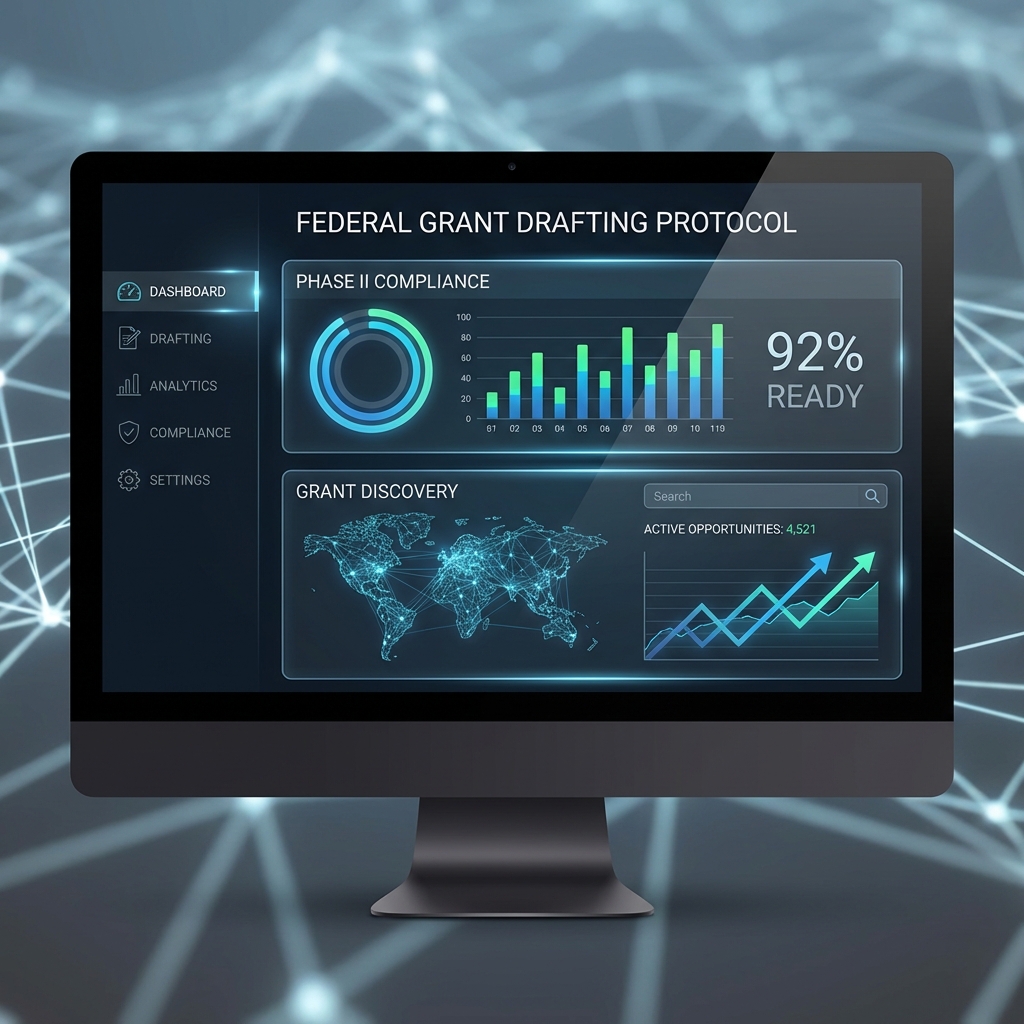
Augmentation that works, secured by default. Grant Drafting Protocol helps founders discover and
draft proposals (humans decide what to pursue). Reasoning Core amplifies analysis capability (humans
validate conclusions). Forbidden Library gives teams local-first, privacy-protected AI access (humans retain
data control). Each product is designed around human authority, not replacement.
Proven Execution: Production-Ready Systems
Our products are the tangible results of that foresight. Grant Drafting Protocol, Forbidden
Library, and the VoidCat Reasoning Core are not vaporware or roadmap items. They are production-ready
systems, MCP-compliant, security-hardened, and deployed at the edge across 330+ Cloudflare cities. They
represent the convergence of technical architecture (MCP-native, OAuth 2.1), platform innovation (Cloudflare
Containers, Workers AI), and market timing (explosive growth, proven demand).